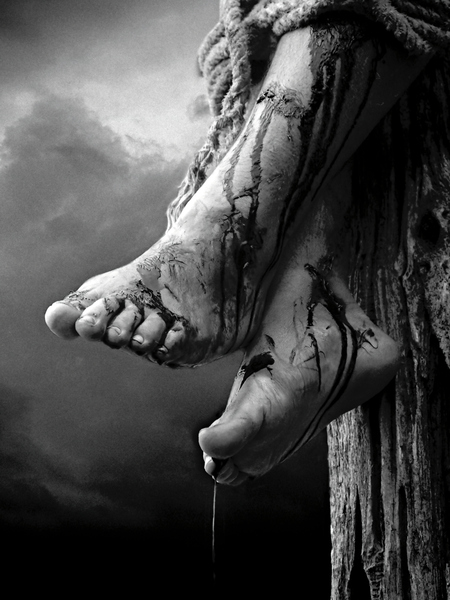
“In order to fully realise the value of salvation, it is necessary to understand what it cost. In consequence of limited ideas of the sufferings of Christ, many place a low estimate upon the great work of the atonement. The glorious plan of man’s salvation was brought about through the infinite love of God the Father. In this divine plan is seen the most marvellous manifestation of the love of God to the fallen race. Such love… is manifested in the gift of God’s beloved Son….”
Volume 2, Testimonies for the Church, pg. 200
“As by one man, sin entered into the world, and death by sin; and so death passed upon all men, for that all have sinned….For as by one man’s disobedience many were made sinners.” Romans 5:12,19
Scripture is crystal clear on this point. As a result of the sin of Adam, our first earthly father, we have all taken his sinful nature and are sinners alike; like father, like son, and in this case, like children.
“All have sinned and fallen short of the glory of God”, Romans 3:23, and as a result, we all rightfully deserve the due reward of sin, which is death, the death from which there is no resurrection, the second death. See: Roman 6:23; Revelation 20:14-15.
If God had decided to wipe Adam and Eve from the face of the earth after partaking of the forbidden fruit, He would have been just in His doings, for the Law demanded the death of the sinner, but “God so loved the world (all humanity), that He gave His only begotten Son” that we would not have to suffer eternal death, John 3:16. This is grace and love, immeasurable, indescribable. He takes no pleasure in the death of the sinner, but that all should turn from their sins and find Life in His Son, Ezekiel 18:32.
It was Christ, the Son of God, who Himself was in the beginning with His Father, before time began, the “brightness” of His Father’s glory and the “express image” of His person, who decided to take the punishment for our sins upon Him, that He may reconcile us to His Father. “He possessed divine majesty, perfection and excellence. He was equal with God”, He was the agent of creation, for of Him, it is written, “All things were made by Him; and without Him was not any thing made that was made,” John 1:3.
He, “who being in the form of God, thought it not robbery to be equal with God, but made Himself of no reputation and took upon Him the form of a servant and was made in the likeness of men“, Philippians 2:6-7. He Himself, took part of flesh and blood and became like His own creation, that through His condescension, humiliation, sufferings and sacrifice, might redeem us from the bondage of sin and save us from the prison house of satan.
“But God demonstrates His own love toward us, in that while we were still sinners, Christ died for us.”
Romans 5:8
Christ consented to die in the sinner’s stead, that man, by a life of obedience, might escape the penalty of the law of God. His death did not make the law of none effect; it did not slay the law, lessen its holy claims, nor detract from its sacred dignity. The death of Christ proclaimed the justice of His Father’s law in punishing the transgressor, in that He consented to suffer the penalty of the law Himself in order to save fallen man from its curse. The death of God’s beloved Son on the cross shows the immutability (unchangeable nature) of the law of God. His death magnifies the law and makes it honourable, and gives evidence to man of its changeless character. From His own divine lips are heard the words: “Think not that I am come to destroy the law, or the prophets: I am not come to destroy, but to fulfil.” Matthew 5:17. The death of Christ justified the claims of the law.
“Christ was the Son of God. He became the Son of Man, that the sons of men might become the sons of God.”
The Consecrated Way to Christian Perfection, pg. 47
His mission was to reconcile God and man, to unite the finite with the Infinite. This was the only way in which fallen men could be exalted through the merits of the Blood of Christ to be partakers of the divine nature. Taking human nature fitted Christ to understand man’s trials and sorrows, and all the temptations wherewith he is beset. For in that He has suffered being tempted, He is able to help them that are tempted, for as the Son of God He could not be tempted and therefore could not feel what we feel, James 1:13. However as the Son of Man, He was tempted in all points such as we are tempted every day, yet He never sinned. Hebrews 2:18; Hebrews 4:15.
He was a Man of sorrows, and acquainted with grief. He endured the sufferings and the afflictions for our sakes that He may make a way for fallen humanity, that we may have Life and have it more abundantly. He was burdened with all the sins of every child of Adam who has ever lived and He endured the separation that sin brings between God and man as He suffered on the Cross of Calvary, Isaiah 59:2. This separation and anguish of spirit caused Him to utter the words:
“Eli, Eli, lama sabachthani? That is to say, My God, my God, why hast Thou forsaken me?
Matthew 27:46
He was wounded for our transgressions, He was bruised for our iniquities; The chastisement for our peace was upon Him, And by His stripes we are healed. All we like sheep have gone astray; We have turned, every one, to his own way; And the LORD has laid on Him the iniquity of us all.
The Father made the Son, who knew no sin, to become sin for us, that we might be made the righteousness of God through His Son, Christ Jesus. He is the Lamb of God, that takes away the sins of the entire world, He is the suffering Servant, who endured the wrath of God on our behalf, He is the King of kings and Lord of lords, who was made a little lower than the angels and condescended from His high and lofty throne, to be made like unto His brethren, fallen, sinful humanity, that if we should believe in Him, we should not perish but have everlasting life, for by the obedience of One, shall many be made righteous, Romans 5:19.
Friends, having been made aware of the great humiliation, condescension, suffering and sacrifice of Christ, the Son of God, the Promised Messiah, whom the Patriarchs and Prophets longed to see in their day, how can we, knowing all this, reject so great salvation?
Think upon these things. Time is of the essence.
Loud Cry Compendium

 Loud Cry Compendium